


Raising Confident Children: When Two Hours Felt Too Short

TehTarik with Dads and Mums | 3 October 2026 | One PunggolIn support of MENDAKI’s Raikan Ilmu
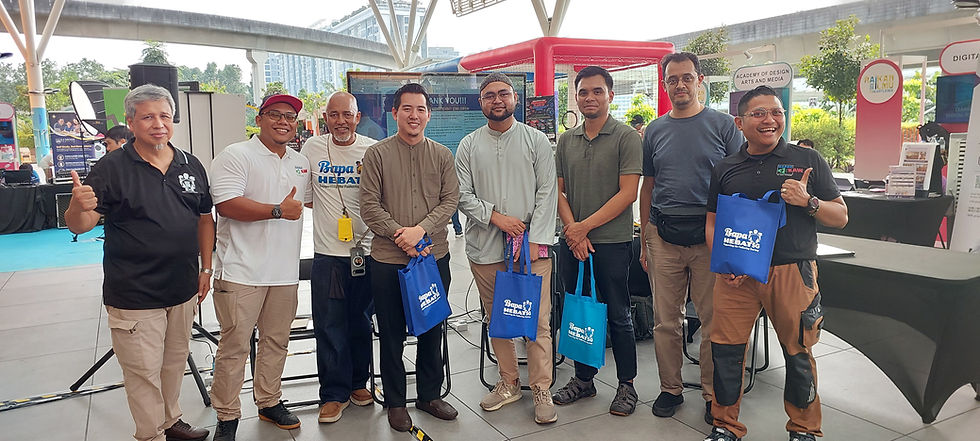
How do we raise children who are confident — not only when things are going well, but especially when they are uncertain, disappointed or afraid to try?
That question sat at the heart of our latest TehTarik with Dads and Mums session, Raising Confident Children: Helping Our Children Believe, Try and Grow.

From the outset, the conversation was never intended to suggest that confident children are those who always feel strong, capable or certain. The deeper question was: What do our children know how to do when confidence disappears?
That framing shaped the entire discussion. Our moderator guide captured it simply:
“Our goal is not to raise children who always feel confident, but children who know what to do when they don’t feel confident.”
Four Voices, One Meaningful Conversation
The session brought together four different perspectives.
Ustaz Md Firdaus Sulaiman shared from the perspective of faith, values and his own journey as a young father.
One of the ideas that stayed strongly with participants was his use of DUIT:
Doa – Usaha – Istiqamah – Tawakkul
It was a simple but powerful reminder that confidence is not merely about believing in oneself. It is also about teaching our children how to act with faith, responsibility, persistence and trust.
This was closely aligned with one of the themes explored during the session: that tawakkul is not passivity. It involves doing what is within our responsibility, making the effort, and then entrusting what we cannot control to Allah.
Arif Tan brought a candid and refreshing young father’s perspective. His personal stories — including reflections from his own childhood and his experiences as a father — made the discussion very relatable.
His contribution reminded us that fathering is rarely about having perfect answers. Often, it is about learning while doing, reflecting on how we ourselves were raised, and becoming increasingly intentional about how we want to raise our own children.
Jamsari Ahmad brought depth from his experience as a father, counsellor and BapaHebat SG co-founder.
One particularly important idea he emphasised was the importance of journeying with our children.
Parenting is not only about the “product” — the grades, behaviour, achievements or outcomes we hope to see.
It is also about the process.
How do we stay alongside our children as they struggle, learn, fail, reflect and try again?
The session explored this distinction in several ways: children need both unconditional belonging and accountability; support without over-rescuing; and guidance without removing every opportunity for them to struggle and learn.
Azri Zulfarhan, our moderator, had the challenging task of bringing all these different perspectives together.
And perhaps the best indication of how well the conversation flowed was this: the two hours seemed to disappear.
Azri himself later reflected that he kept checking the time because he could hardly believe how quickly the session was moving.
When a two-hour dialogue feels too short, something meaningful is happening.
Confidence Is More Than Praise
The discussion moved beyond the usual ideas of “encouraging” children.
We explored how confidence is gradually built when children have:
a secure emotional base,
opportunities to try without being rescued too quickly,
space to make age-appropriate choices,
permission to make mistakes,
a voice within clear parental boundaries,
and adults who help them recover from setbacks.
One important distinction was made between confidence and resilience:
Confidence says: “I think I can do this.”
Resilience says: “Even if I discover that I can’t do it yet, I know what to do next.”
That is a very different developmental goal.
We are not trying to create children who never doubt themselves.
We are trying to help children learn how to pause, ask for help, regulate their emotions, break a problem down, tolerate embarrassment, try again and recognise that “I cannot do this yet” is very different from “I cannot do this.”
When Failure Happens, Connection Comes First
Another important part of the conversation was what parents should do when a child fails, is rejected or becomes disappointed.
The temptation is often to immediately teach, explain, advise or solve.
Instead, one simple sequence emerged:
CONNECT → UNDERSTAND → REFLECT → ACT
Sometimes our children first need someone to sit with them in the disappointment before they are ready to learn from it.
This is where fathering becomes less about fixing and more about presence.
Feedback That Spoke Volumes
After the session, Azri spoke with members of the MENDAKI team.
One of the most meaningful pieces of feedback was that the sharing had caused some of them to reflect personally on their own parenting.
One staff member even expressed regret over certain past approaches and shared an intention to do things differently after the session.
We may not yet have all the formal feedback forms or evaluation data.
But sometimes feedback like this speaks volumes.
If a conversation causes someone to pause, reconsider, and decide to approach their child differently, then perhaps something important has already happened.
That is, ultimately, the work we hope to do.
Not to tell parents that they are doing things wrongly.
Not to present ourselves as having all the answers.
But to create spaces where fathers, mothers and caregivers can reflect, learn from one another and perhaps go home willing to try something differently.
Perhaps Our Job Is Not to Remove Every Struggle
One of the closing ideas from the session captured the spirit of the afternoon:
Perhaps our role as parents is not to remove every struggle, prevent every disappointment or make our children feel confident all the time.
Perhaps our role is to give them enough security to struggle, enough space to try, enough voice to think, enough guidance to choose, and enough love to know that failure does not change where they belong.
So that one day, when we are no longer standing beside them, they can say:
“I’m not confident right now. But I know what I can do next.”
With Gratitude
On behalf of BapaHebat SG, our sincere appreciation goes to:
Ustaz Md Firdaus Sulaiman — for grounding the conversation in faith, values and practical wisdom.
Arif Tan — for sharing openly and honestly from his experience as a young father.
Jamsari Ahmad — for reminding us to value the journey, the relationship and the process, not merely the outcomes we expect from our children.
Azri Zulfarhan — for facilitating the dialogue with warmth, balance and energy, and for helping the two hours pass far too quickly.

And to everyone who attended, participated and reflected with us — thank you.
This session was held in support of MENDAKI’s Raikan Ilmu, a movement that places learning not simply within schools or examinations, but within a broader culture of curiosity, lifelong growth, adaptability and contribution to the community.
At BapaHebat SG, that resonates deeply with how we see fatherhood too.
We never really “graduate” from being fathers.
We continue learning, adjusting, reflecting and growing alongside our children.

Stronger Fathers. Stronger Families. Stronger Community.


Comments